Chlorine is what keeps your pool water sanitized and safe to swim in. Get it right and the water stays clear and healthy; get it wrong and you either grow algae or end up with red eyes and that harsh chemical smell.
The tricky part is that "how much chlorine" has no single answer, it depends on your pool's size, how low your chlorine has dropped, and which product you're using. This guide gives you the simple method, a calculator to do the math for you, and clear guidance on shocking.
What Level Should You Aim For?
Free chlorine (FC) is the chlorine still available to sanitize your water. For everyday swimming, keep it in a steady range; you only push it much higher when you deliberately shock the pool.
- Normal free chlorine: 2 to 4 ppm for most stabilized pools.
- Shock level: about 10 to 12 ppm, or 10 times your combined chlorine (CC) reading, whichever is higher.
- Never swim until free chlorine has fallen back to roughly 5 ppm or lower after shocking.
Chlorine demand rises with heat, heavy use, rain, and sunlight, so you'll add more in a hot week with lots of swimmers than in cool, quiet weather. Test regularly rather than dosing on a fixed schedule.
Work Out Your Dose
The amount of chlorine to add depends on your pool volume, how far below target your free chlorine sits, and the strength of the product. Liquid chlorine (12.5%) and cal-hypo granular (73%) are the two most common, and they dose very differently. Enter your numbers below and the calculator handles the rest.
Don't know your pool's volume? Work it out first with the Pool Volume Calculator, then come back, an accurate gallon count is the single biggest factor in getting the dose right.
When and How to Shock
Shocking means adding a large dose of chlorine to blast through contaminants that normal levels can't handle. Shock the pool when you see cloudy or green water, after heavy use or a storm, or when your combined chlorine (the difference between total and free chlorine) climbs above about 0.5 ppm.
- Test first so you know your starting free and combined chlorine.
- Add the shock dose in the evening, sunlight burns off unstabilized chlorine fast.
- Run the pump for several hours to circulate it fully.
- Re-test and wait until free chlorine drops to about 5 ppm before swimming.
A safety note that matters: always add chlorine to the pool with the pump running, and never mix different chlorine products (or mix chlorine with any other chemical) in the same container, it can react violently. Add one product at a time, directly to the water.
Best Products
Disclaimer: all product links below go to Amazon.com. As an Amazon Associate we may earn from qualifying purchases.
1Best for Regular Dosing
Liquid Chlorine / Liquid Pool Shock
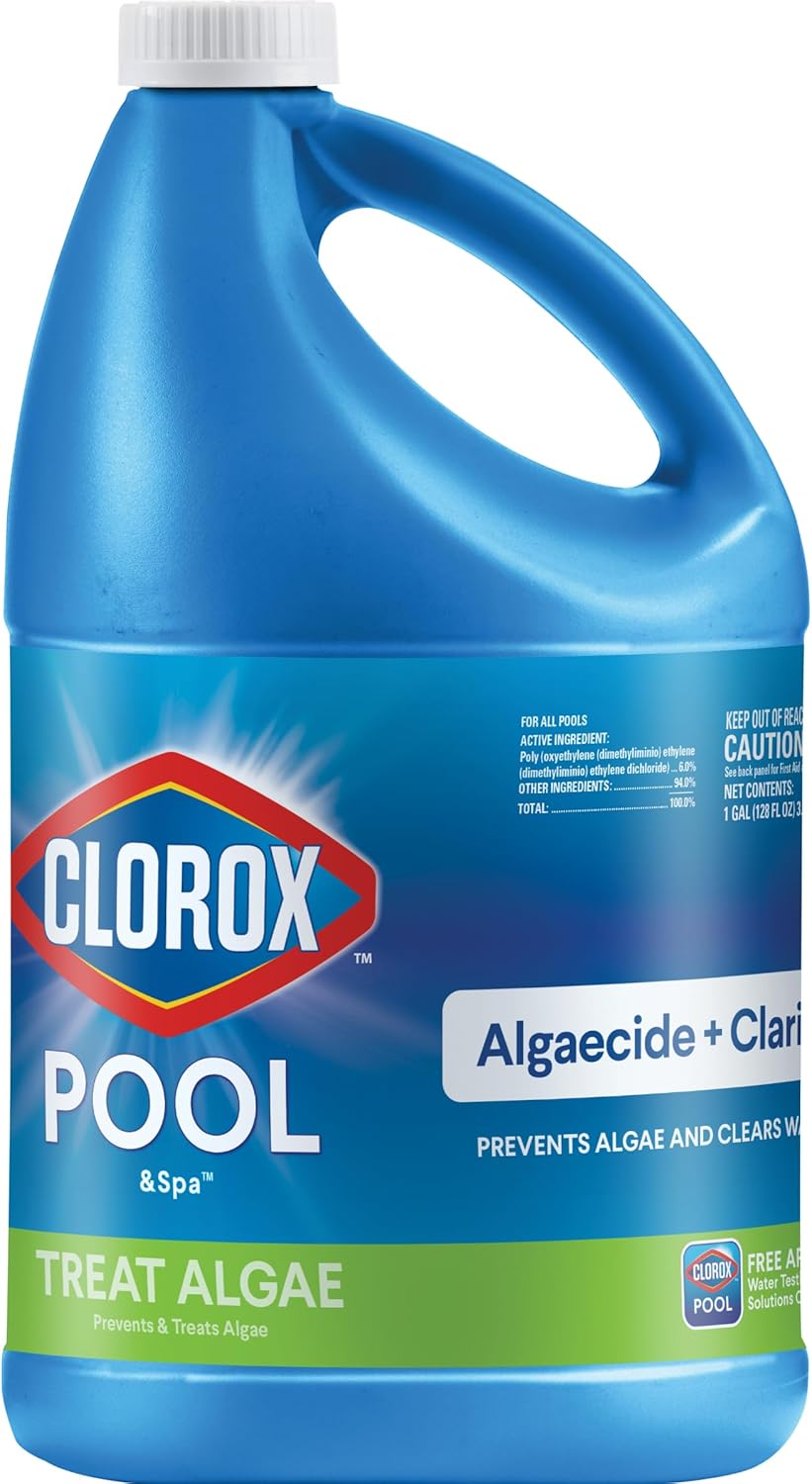
Liquid chlorine (sodium hypochlorite, usually 10 to 12.5%) is the simplest way to dose a pool. It dissolves instantly, leaves no residue, and doesn't add stabilizer or calcium, making it ideal for routine top-ups and shocking alike.
Pros
- Dissolves instantly, no pre-mixing
- No added calcium or stabilizer buildup
- Cost-effective for regular use
Cons
- Loses strength over a few weeks in storage
- Heavy and bulky to carry
2Best Granular Shock
Cal-Hypo Pool Shock

Calcium hypochlorite (cal-hypo, around 65 to 73% available chlorine) is a powerful granular shock with a long shelf life. Pre-dissolve it in a bucket of water before adding to avoid bleaching a vinyl liner or leaving undissolved grains on the floor.
Pros
- Very strong, long shelf life
- Great for a fast, powerful shock
- Cheaper per dose than many alternatives
Cons
- Adds calcium, watch calcium hardness
- Should be pre-dissolved before adding
3Essential Companion
Pool Water Test Kit

You can't dose accurately without knowing your current levels. A good drop-based test kit or test strips let you measure free and combined chlorine so you add exactly what's needed, no more, no less.
Pros
- Removes the guesswork from dosing
- Measures free and combined chlorine
- Cheap insurance against over- or under-dosing
Cons
- Reagents need occasional replacing
- Strips are less precise than drop kits
Frequently Asked Questions
How much chlorine do I add to a 10,000-gallon pool?
To raise free chlorine by 1 ppm in 10,000 gallons, add about 12 fl oz of 12.5% liquid chlorine, or roughly 2 oz (by weight) of 73% cal-hypo. Use the calculator above to match your exact volume and target.
Can I put too much chlorine in my pool?
Yes. High free chlorine irritates eyes and skin and can damage liners and equipment over time. If you overshoot, simply stop adding chlorine and wait, sunlight and normal use will bring it back down. Don't swim until it's about 5 ppm or lower.
Should I use liquid chlorine or granular shock?
Liquid chlorine is easiest for routine dosing and adds nothing but chlorine. Cal-hypo granular is a strong, long-lasting shock but adds calcium and should be pre-dissolved. Many owners use liquid for regular top-ups and keep cal-hypo on hand for a powerful shock.
Why does my chlorine disappear so fast?
Sunlight, heat, heavy swimmer loads, and low stabilizer (cyanuric acid) all burn through chlorine quickly. If it vanishes within a day, check your CYA level, too little offers no UV protection, and test for combined chlorine, which signals a demand that needs shocking.
Final Verdict
The right chlorine dose comes down to three numbers: your pool's volume, how far below target you are, and the strength of your product, and the calculator above turns those into an exact amount. Keep free chlorine at 2 to 4 ppm day to day, shock to 10 to 12 ppm when the water needs a reset, always add it with the pump running, and never mix products.